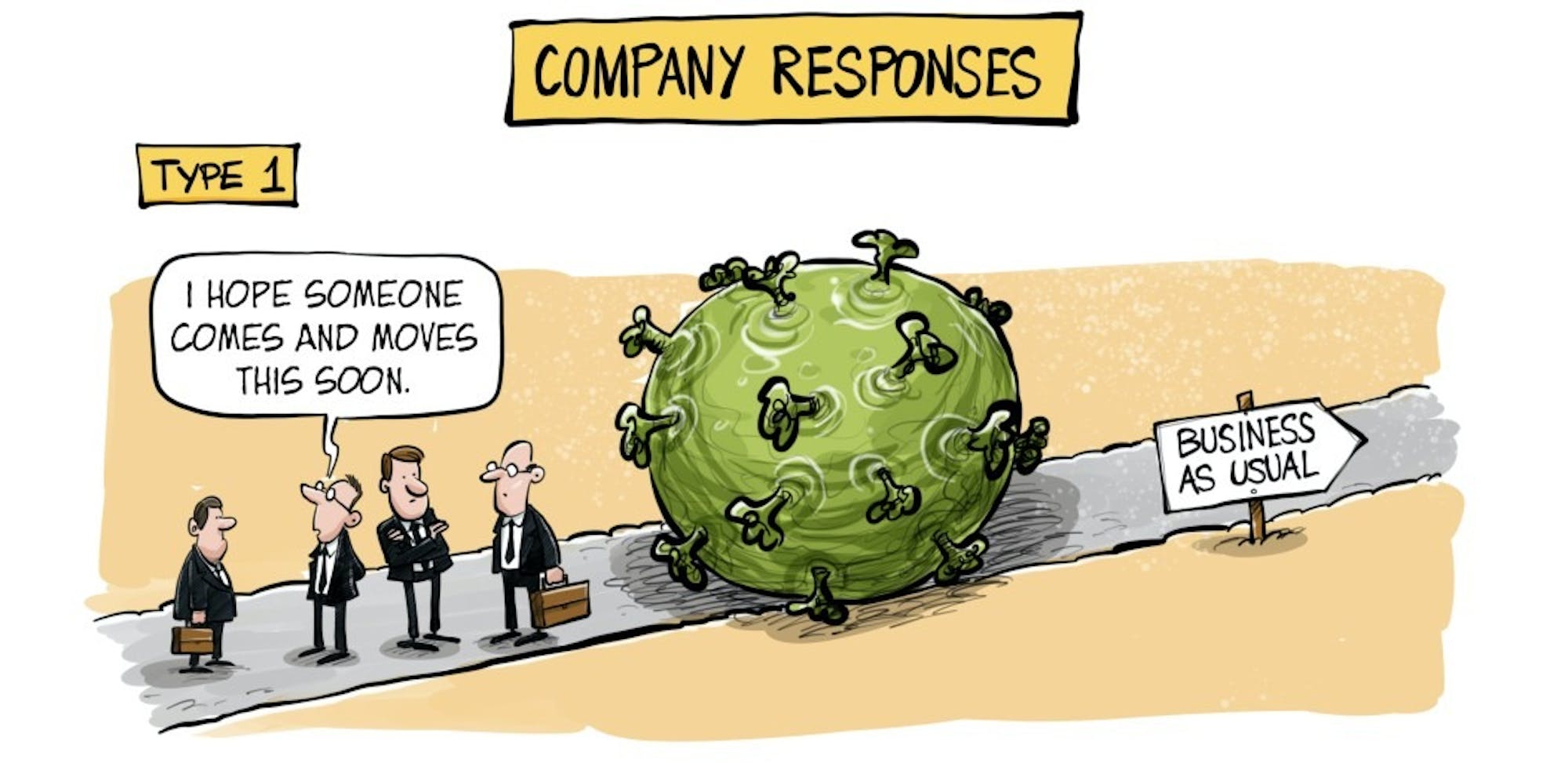
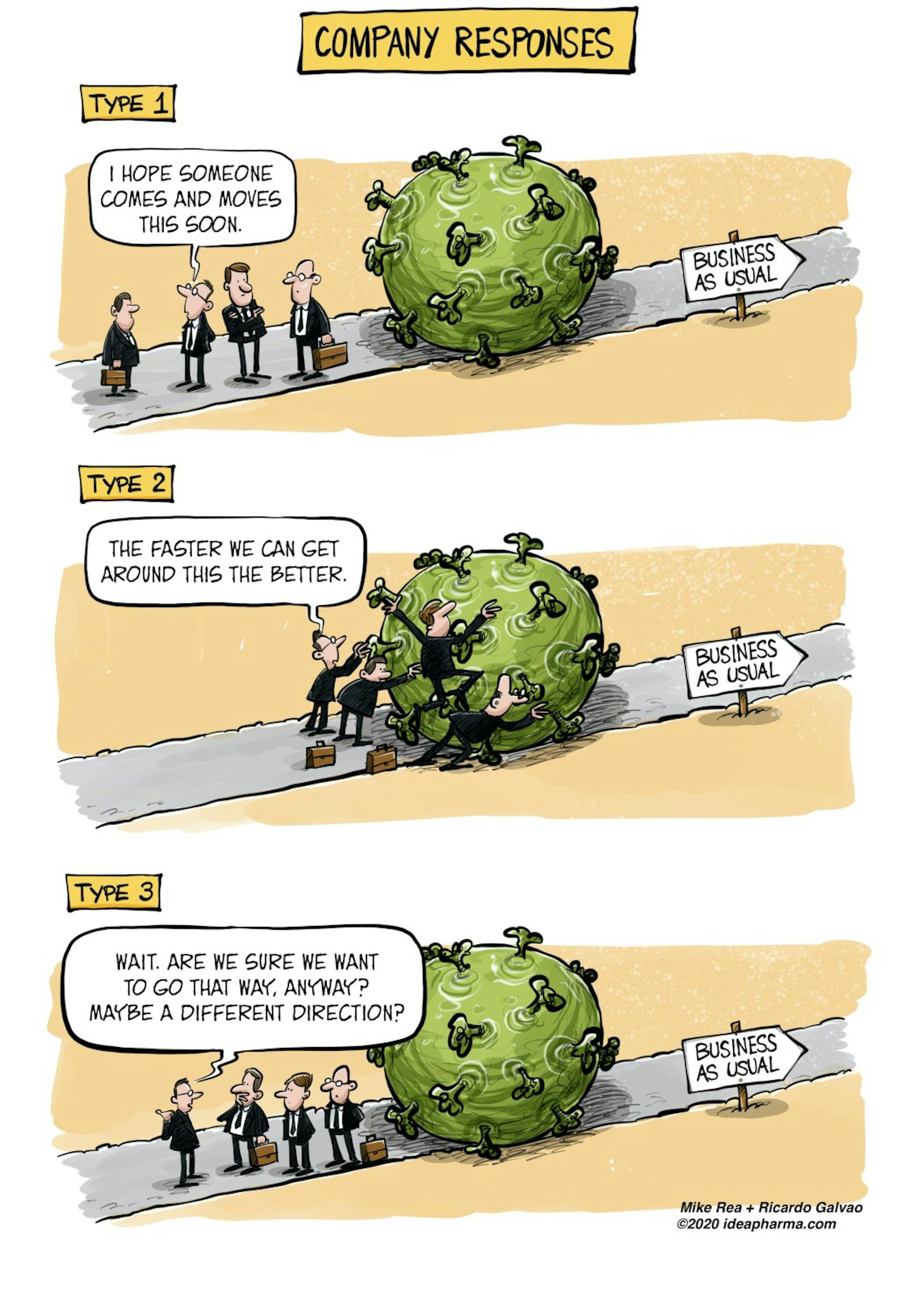
It has been the idea of agility and innovation. It is clear that some companies started this crisis with optimism that it would soon be over and they could get back to business as usual. Some, in contrast, have applied ingenuity to the task of recreating business as usual - quickly looking for ways to do what they were doing, but virtually. The third group is more interesting - they're appropriately doing what the second group are doing, but also using the time to re-examine directions and business practice.
At the core of that segmentation has been the diversity at the core of their business. Narrowing a therapeutic focus 'strategically' is a classic McKonsultancy outcome, but it does move companies towards a dependency on things they can predict. If, as has happened, something happens that almost no-one predicted (at least with the necessary specificity), you have few options - you're in segments 1 or 2.
Those companies who embraced diversity in their pipeline have a) more choices available, and b) more openness to being diverse. That may seem obvious, but it is the second characteristic that is more important at the moment. Monocultures tend not to do so well under outside threat. As one of our mottos goes, 'when you only have one option, you have no choice.'
There are two things that are true. You do not know how long this will last. You do not know how its ripple effects will play through. You may have guesses, good guesses, opinions and more, but you do not know. A strategy that depends on you knowing how this turns out fails two basic tests of strategy: is it survivable, and is it adaptable?
This is a time for new questions about your approach to pipeline, to commercialising, to diversity and optionality.
Sometimes a crisis, however horrific, can be a great opportunity for rebuilding. Shortly after my wife and I had moved from Manchester, and a few days before my first child was born, Manchester's Arndale Centre was blown up by an IRA bomb. Fortunately, there were no fatalities, although around 200 people were injured. That incident began a transformation of the city centre. Prior to the bomb, no-one would have had the remit to remove an eyesore of a building from the city's heart - no council meeting would ever have concluded with that decision. Once it had happened, there were no calls to rebuild it. Transformation began with a catastrophic, unpredictable event.
I would argue that the same thing will apply to remote and virtual working. Hard to imagine the board meeting that would have sanctioned, overnight, such a drastic change to working practice. However, now it has happened, and is working, the precautionary principle that would have prevented it as a decision was wiped away by Covid-19. We don't know exactly how this will look once we're 'through', but it's hard to imagine no change...
If you do not change direction, you may end up where you are heading. - Lao Tzu
I hope that the optionality and diversity that pharma pipelines have needed is given a boost by this crisis. It will do so with a change to our decision making. I'll leave with another of our mottos: 'without a plan, 10 men can see no further than one.'
Subscribe to our newsletter for more insights.
Further reading
-
Announcement
This is our book on positioning pharmaceuticals
This is our book on positioning pharmaceuticals, but it is not a book on how to position pharmaceuticals.
-
Innovation
Covid Economics & Innovation
Alongside its direct harmful effects on health, the COVID-19 outbreak has large negative economic repercussions (Baldwin and Weder di Mauro 2020). Science, technology and innovation policy has a key role in understanding the crisis & finding a way out.