Five Biotech Milestones - Lab to Success
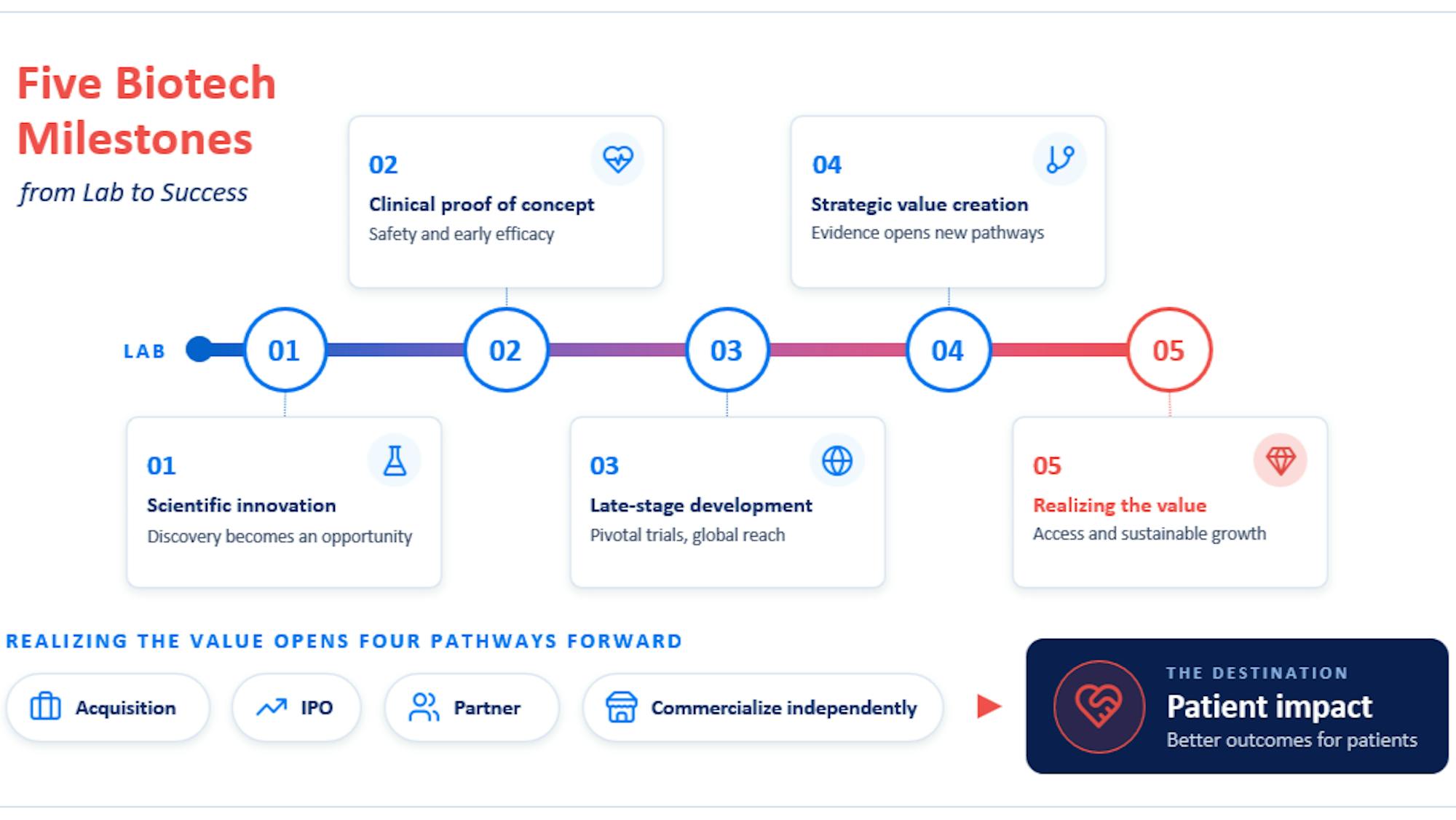
Developing a molecule from lab to patients requires more than 1,000 decisions, made right and at the right time. However, the biotech journey is rarely linear. From scientific discovery to commercial impact, companies must navigate a series of critical milestones that test their science, strategy, financing, and resilience.
The most successful biotech stories tend to share five defining stages.
1. Translating scientific innovation into a clear vision
Every biotech journey begins with a scientific invention or insight, but the first major milestone is transforming that insight into a therapeutic opportunity that addresses a meaningful unmet need.
Candel Therapeutics provides a strong example. The company built its strategy around a novel viral immunotherapy platform designed to stimulate a systemic anti-tumor immune response. By focusing on localized intermediate- to high-risk prostate cancer, where recurrence remains a significant clinical challenge, Candel translated an innovative scientific concept into a clearly defined clinical and commercial vision. The transition from promising mechanism to a clearly defined clinical program represents one of the most important early achievements in any biotech journey.
2. Generating clinical Proof of Concept
Scientific promise alone is not enough. Investors, partners, regulators, and physicians all look for evidence that a therapy can make a meaningful difference for patients.
This proof-of-concept stage often comes through Phase 1 or Phase 2 studies, where early signals of efficacy and safety begin to emerge. Positive clinical data can transform a biotech’s trajectory, attracting capital, validating the underlying science, and creating momentum for larger development programs.
For many biotech leaders, this is the point where an idea becomes a credible therapeutic opportunity.
3. Scaling into late-stage development
Advancing into pivotal studies is a milestone that separates emerging biotechs from more mature organizations. Large-scale global trials demand sophisticated execution and represent a substantial commitment of resources, but they also bring companies closer to potential regulatory approval and commercialization.
Candel Therapeutics' advancement of aglatimagene besadenovec in prostate cancer illustrates this transition. Beyond generating the clinical evidence required to support potential approval, the company has advanced an off-the-shelf viral immunotherapy platform designed to simplify manufacturing and deployment compared with more individualized cell therapy approaches. Scaling both the clinical and manufacturing infrastructure needed to support registrational development represents a critical step toward broader patient access and commercial readiness.
4. Creating strategic value and optionality
As programs advance and clinical evidence builds, biotechs gain strategic flexibility. Strong data can attract partnerships, licensing agreements, new investors, and broader market interest, creating multiple pathways forward.
NeuroDerm Ltd.’s acquisition by Mitsubishi Tanabe Pharma Corporation is a notable example. The approximately $1.1 billion transaction validated NeuroDerm’s Parkinson’s disease program and provided the resources needed to continue advancing its innovative drug-device platform. Such transactions often represent the culmination of years of scientific and clinical progress.
5. Delivering patient impact and realizing value
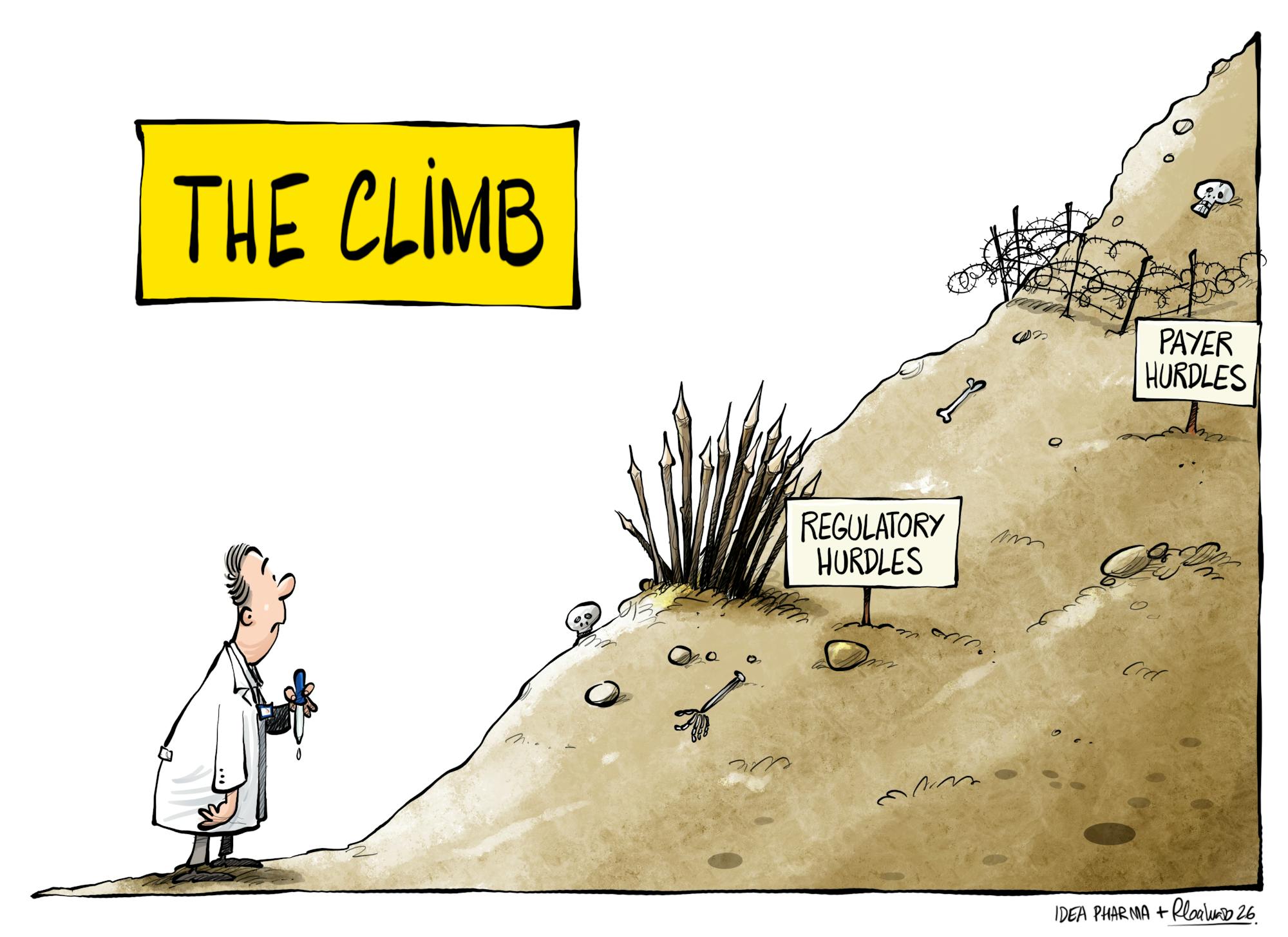
The fifth milestone is converting clinical success into patient impact and sustainable enterprise value. Achieving regulatory approval is only one hurdle; companies must also establish scalable manufacturing capabilities, secure market access, engage healthcare stakeholders, and execute a successful launch strategy that ensures adoption and uptake.
Companies pursue this milestone through different models. Some partner with or are acquired by larger pharmaceutical organizations that provide the scale and capabilities required to maximize reach. Others access the public markets or build fully integrated commercial biopharma organizations. Increasingly, biotechs are also choosing fractional commercial models, accessing specialized launch capabilities and proven best practices without assuming the cost and risk of building a full commercial infrastructure too early.
Candel Therapeutics exemplifies the growing adoption of hybrid commercial models, combining internal capabilities with specialist partners to access product strategy, market access, medical affairs, and field execution expertise. Such approaches can reduce launch risk, preserve capital, and leverage established best practices while maintaining strategic discipline.
Insmed Incorporated provides an example of a biotech that chose to build a fully integrated biopharmaceutical company, evolving from a development-stage organization to an integrated commercial business with approved therapies that have reached patients globally and a market capitalization of approximately $24 billion (July 9th 2026).
Ultimately, the measure of success is not approval alone, but the ability to ensure that innovative medicines reach the patients who need them while generating lasting value for stakeholders.
The common thread
Whether it is Candel Therapeutics advancing a novel oncology therapy through pivotal trials or NeuroDerm building sufficient value to attract a major acquisition, or Insmed evolving into a fully integrated biopharmaceutical company with approved therapies reaching patients worldwide, the biotech journey is defined by a sequence of milestones rather than a single breakthrough moment. Companies that successfully navigate these stages create value not only for shareholders, but more importantly for patients waiting for new therapeutic options.
In biotech, progress is measured one milestone at a time, but each milestone brings the industry closer to transforming lives.
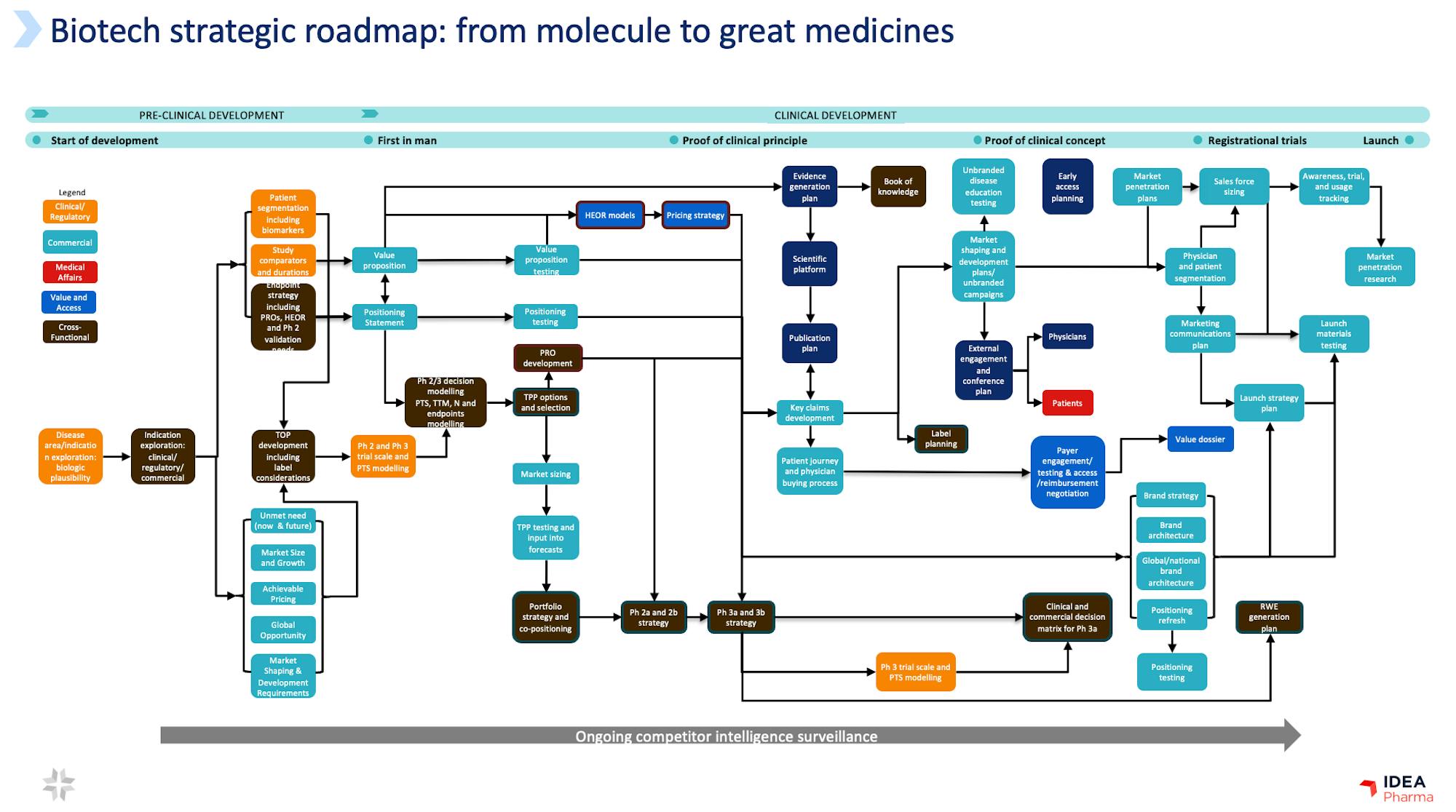
Sharing the resource below from IDEA Pharma | From R&D to RxD: a Strategic Roadmap for biotech leaders to set out their path. Contact me here for the High-Res file or further biotech strategy insights.
Subscribe to our newsletter for more insights.
Further reading
-
The Keytruda Blueprint: Alex Gray, David Radwaner, and Tom Brockbank on the IO Revolution: Part II
The Keytruda Blueprint: Alex Gray, David Radwaner, and Tom Brockbank on the IO Revolution: Part II
-
Targeting the Totality of MS: Jason Tardio on Immunic’s Combined Neuroprotective & Anti-Inflammatory Strategy

