We now know there were more products with sales of over $5bn in 2010 than in 2015 (15 vs 12).
Feel free to come and collect if you had the confidence to take that bet back then...
This will please my daughter. In my house, the only rule is that I am always wrong - the only question is how long it takes to establish that fact.
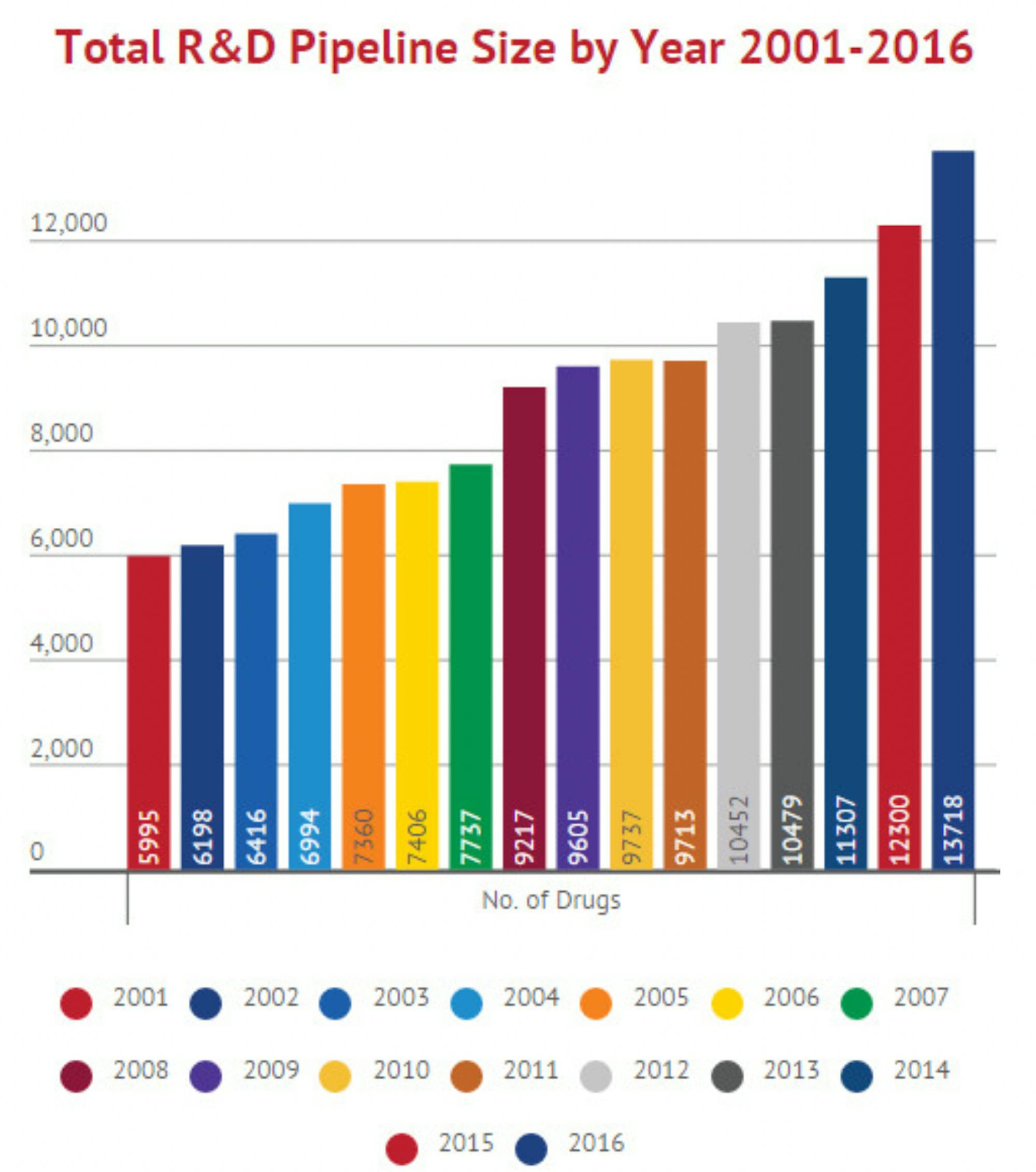
Of course, the industry is wrong more often than it is right. While pipeline size increases year on year, the numbers of drugs making market changes only barely. Our return on energy is decreasing. I have written before about attrition, and the belief that the product that someone somewhere was once excited about ends up on the cutting floor with all the other candidates is simply a side effect of the way pharma has to work.
What if, however, we embraced being wrong? Wouldn't we treat our products differently if we didn't believe we knew how things would turn out? That 'follow the science' was a statement of belief in experimentation rather than proof.
Thinking about my bet has forced me to examine my wrongness in ways that I never would have if I'd been right... Why was I wrong? What did I miss? Is there something about the set of products this past year that was different than 2010. Imagine if I had been right (I know, Imogen, I know...)? I'd have put it down to 'of course' and moved on, confident that my rational optimism was supported.
When I'm asked about what makes companies productive, the answer always is that they want to learn lessons from their success, and from their failure. Unfortunately, most want to learn from neither. I suspect that many (all?) companies were wrong about what would launch, and what would fail. What an opportunity awaits companies that want to learn from both...