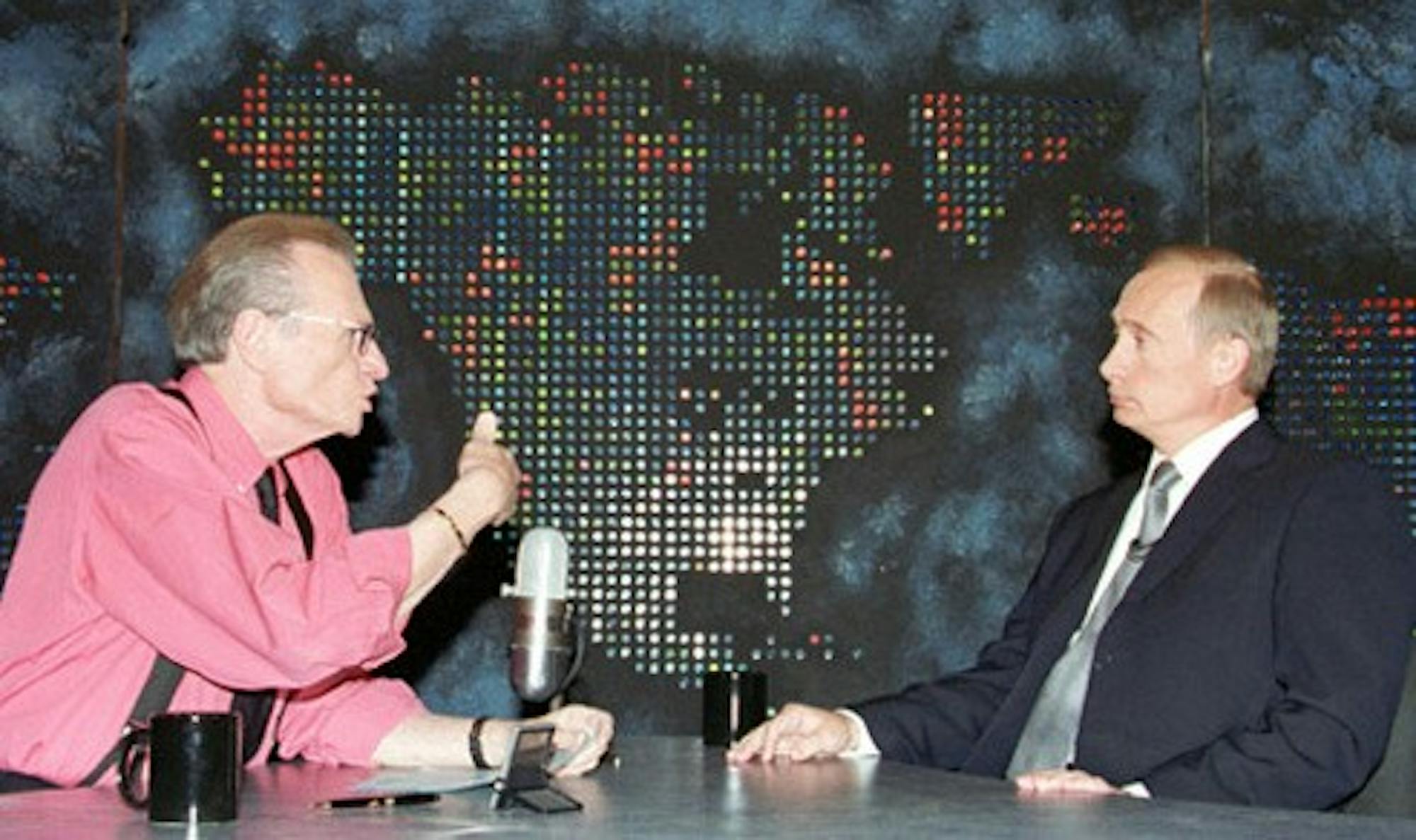
As famously, King was a master of the fractal question: answers that would reveal new questions. And that was the beauty - an answer generated by a good question got King and his interviewee to a place that could not have been known by either in advance. The second and subsequent questions started from a place that was not predictable at the start. That kind of active listening characterises good interviewers or moderators - it frustrates us when someone simply pursues a one-directional set of questions and gets back only expected answers which aren't built upon. Being ready to ask a question from a new vantage point is a skill that differentiates interviewers who know their subject from pre-formulated autocue readers.
The analogy to pharma is clear. If we see our early phase as our first question, with a plan already set for what question we will then ask, it would be impossible to end up 'listening' to what the drug just told us.
To have the drug tell us anything interesting in the first place, we may need an oblique approach - one that is set up to generate interesting answers instead of 'right' ones - ticking off success or failure. If we are simply validating (or invalidating) our prior hypothesis, we're in the mode of 'nothing I say this day will teach me anything'. Diversity in early phase will yield answers that would be impossible with pre-determined linearity.
Those questions shouldn't just be 'follow the science'. Knowing that alternative regulatory pathways might exist, or that we really would prefer to avoid going head to head with statins in the market will provide questions that should be fed into the early phase. The 'obvious' early phase may well, if luck prevails, only take you to an obvious market, where you will be dependent on the luck that your product is significantly better.
If drug development is a learning process, instead of a predictive one, then it will be an asymmetric one - a team in another company will have subtly different fortune, and different questions. One will ask better questions, and will have better listeners. As Larry King proved, better listeners make better questions.
Subscribe to our newsletter for more insights.
Further reading
-
Announcement
Hark! The unmistakable sound of Purpose and why your asset needs it!!
Hi everyone – Jodi here and for this month’s edition of Junkie I’m talking to Dr Alex Grey, Chief Medical Officer about what happens when we take a well-positioned new medicine out into the real world (and when things go wrong).
-
Announcement
5 Key Questions for Biopharmaceutical Innovation in Lung Cancer
The lung cancer landscape demands bold thinking and action – not just through our ongoing efforts to develop innovative treatments but by finding novel solutions that help advance clinical care and improve patient outcomes.