POSITION: a new Market Shaping model
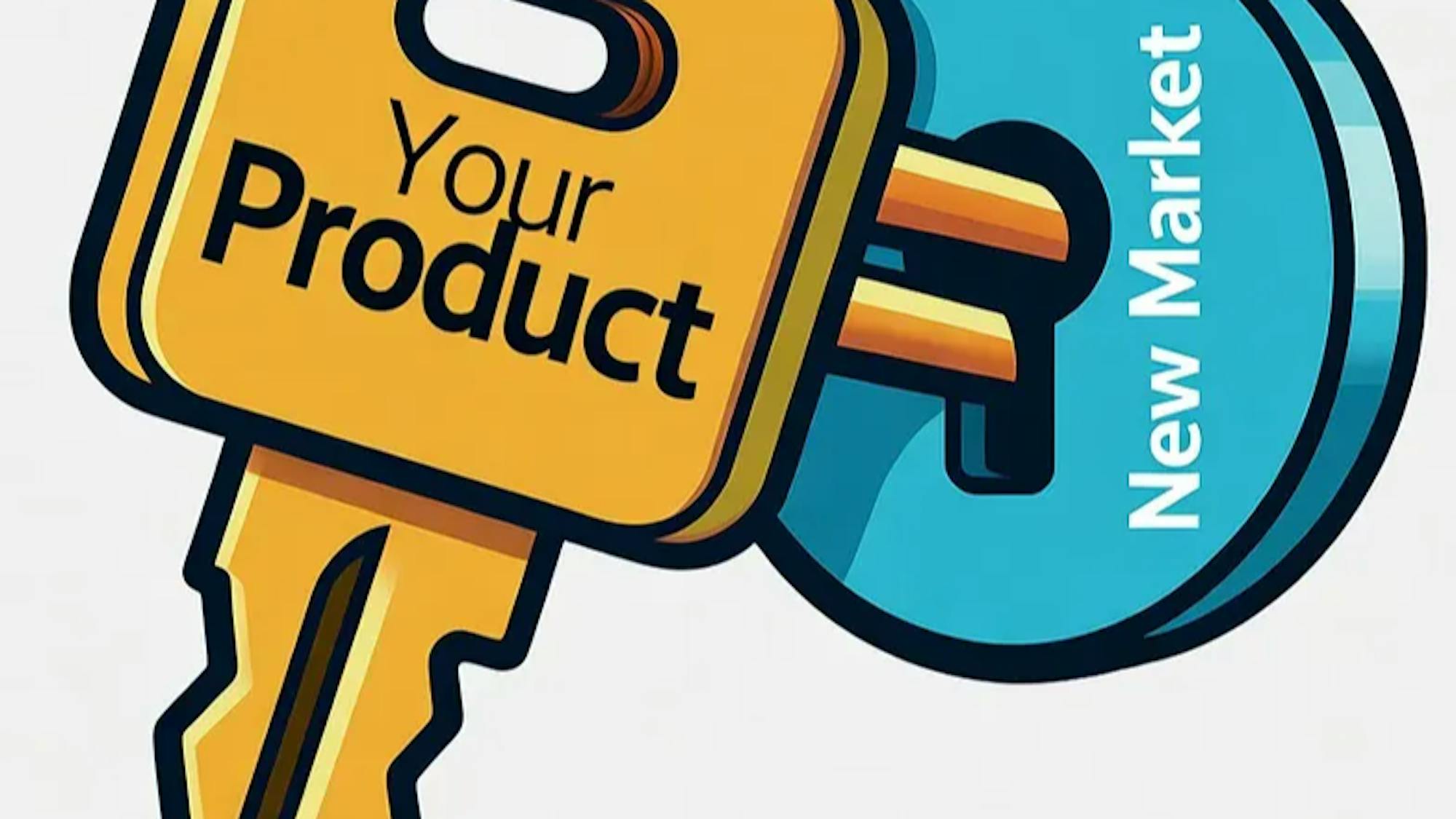
As a strategist who’s been involved in, and dissected, launches from Lipitor’s blockbuster blueprint to Zevra’s orphan triumph, I’ve seen how real winners don’t just enter markets - they invent them.
If you’re tuned into the messages from my book Pharmaceutical Positioning, you know I’m fascinated by turning science into stories that stick. I’ll unpack market shaping through Gavi’s vaccine playbook (a global health masterclass) and four pharma-led pre-launch case studies that turned “what if” into billions.
But first: a fresh, actionable definition tailored for pharma professionals. Here’s the POSITION Model - my take on the classics, but with a guide to ecosystem engineering.
First of all, why do I use the word ‘ecosystem’? Well, it’s based on the essential challenge for market research - the market may not know what it wants before it gets it, and it’s certainly open to having its needs and wants shaped by an active participant.
That markets are malleable is no surprise, so it’s quite surprising that a lot of pre-launch models treat them as fixed. We tend to research future markets based on what people in present markets think, to use language that’s currently in use, and to work with existing economic models.
What Is Market Shaping? The POSITION Model
Market shaping in pharma is the deliberate orchestration of supply, demand, and stakeholder behaviors to preemptively resolve market failures - like undertreated diseases, stagnant guidelines, or payer skepticism - creating a fertile ground where your product doesn’t compete; it out-competes, asymmetrically. It’s about flipping “nice-to-have” into “non-negotiable,” often 3–5 years pre-filing, via levers like KOL alliances, evidence seeding, and regulatory nudges. The goal? Amplify unmet needs, create aspirational wants, and position your therapy as the ecosystem’s answer - driving adoption, loyalty, and ROI that compounds for decades.
To make it tactical, here’s the POSITION Model (a pharma-tuned evolution of systemic frameworks, zeroing in on pre-commercial precision):
Prime the Paradigm: Redefine success metrics (e.g., “lower is better” for LDL) through data and KOL narratives, shifting baselines to expose gaps.
Orchestrate Opinion Leaders: Rally KOL networks and advisory boards to co-author publications and symposia, seeding credibility and urgency.
Shape Stakeholder Narratives: Craft tailored stories - evidence for HCPs, ROI for payers, empowerment for patients - to align incentives across silos.
Influence Institutional Guidelines: Lobby for tighter targets or expanded criteria via advocacy and real-world evidence, embedding your “why now.”
Target Therapeutic Gaps: Layer epidemiology and failure rates to spotlight unmet needs, turning statistics into emotional imperatives.
Ignite Innovation Incentives: Advocate for regulatory fast-tracks (e.g., surrogates, orphans) and adjacencies to de-risk and broaden eligibility.
Optimize Outcomes Evidence: Harness head-to-heads, RWEs, and health economic models to prove superiority and spillovers.
Nurture Network Effects: Activate advocacy amplifiers and feedback loops to scale adoption, iterating for sustained momentum.
This model’s trying to do one thing: Transform market friction into your flywheel. Inefficient markets waste 40% of R&D spend; POSITION turns that into 3–5x returns by making your product the “inevitable” fix, the perfect fit for a market you just shaped.
Gavi’s Global Blueprint: Lessons for Pharma’s Pre-Launch Plays
Gavi, the Vaccine Alliance, isn’t pharma - but their two-decade shaping of fragile vaccine markets mirrors most pre-launch markets. Founded in 2000, they pooled demand from 70+ low-income countries to fix erratic supply and high prices, procuring 1.4B doses annually by 2025. Their Healthy Markets Framework (HMF, 2024 update) assesses supply/demand trade-offs, much like Phase 2 symposia gauge HCP gaps.
Spotlight: The pentavalent vaccine (diphtheria-tetanus-pertussis-HepB-Hib combo). In 2005, GSK’s monopoly priced it at $3.60/dose; coverage languished under 20%. Gavi’s phases - launch (volume guarantees to 100M doses), growth (Gates risk-shares with Serum Institute, tenders at $1.15–2.95), maturity (phased bids at $0.60–1.40, capacity to 600M) - slashed prices 75% to $0.85 by 2019.
Outcomes: 10M lives saved, $500M annual savings, suppliers from 1 to 8.
ROI? $21 health/economic return per $1 invested.
Gavi’s genius - patience (8–15 years), partnerships (WHO/UNICEF), monitoring (HMF/PRGs) - translates to pharma: Treat pre-launch as “Phase 0,” building resilient demand before the bell.
Pharma’s Pre-Launch Moves: Four Case Studies in POSITION
Now, the pharma cases: How Lipitor, Ozempic, Mounjaro, and Limpaspen wielded POSITION to engineer wants and needs. These aren’t hypotheticals - they’re quantifiable triumphs, proving pre-launch pays.
1. Pfizer’s Lipitor: Priming the “Lower is Better” Paradigm (1994–1997)
(You can revisit my post on Lipitor here… Lipitor: good, best, better) Pfizer (via Warner-Lambert) didn’t chase statins where they were; they reshaped cholesterol management around more aggressive LDL targets, exposing rivals’ “modest” reductions as failures.
POSITION in Action :Prime (NCEP targets changed from <130 to <100 mg/dL); Orchestrate (86K PCPs via a huge symposia program); Shape (70% “inadequate” narratives); Influence (FDA surrogates, saving $300M/2–3 years).
Targeted Markets: Physicians (PCPs/KOLs); payers via guidelines.
Value Proposition: “Fast, far LDL drops, lower is better - simple dosing for compliant wins.”
Differentiation: “Potency king” at 10% lower price.
Outcomes & ROI: $150B lifetime revenue; $12.9B peak (2006); 50%+ share, 10x category to $20B+; averted 4M CV events, $100B+ savings.
A consumer parallel:
Apple’s iPhone (2007 Launch): Priming a Paradigm Shift Like Lipitor’s “Lower is Better”
Apple’s iPhone didn’t enter the phone market - it created the smartphone era by reframing “touch is intuitive” as the new baseline, much like Pfizer redefined LDL targets to derive advantage from rivals’ newly established inadequacies. Pre-launch (2005–2007), Steve Jobs seeded developer kits to 1,000+ app creators (your KOLs), building an ecosystem before a single device shipped - echoing pharma’s advisory boards co-authoring publications.
POSITION Parallels
Outcomes: 6M units sold Year 1; spawned a $500B+ app economy. ROI? Apple’s market cap exploded 10x by 2012, averting “dumb phone” obsolescence.
Pharma Tie-In: For a novel biologic, seed digital tools for HCPs pre-filing to “invent” adherence tracking as the gold standard.
2. Novo Nordisk’s Semaglutide (Ozempic/Wegovy): Obesity as Chronic Imperative (2017–2021)
Novo bootstrapped from diabetes to obesity, flipping “lifestyle” to “treatable disease” with $100M+ ecosystem spend.
POSITION in Action: Prime (”GLP-1s modify disease” via 50+ NEJM papers); Orchestrate (200+ endo KOLs); Shape (40% undertreatment metas); Ignite (FDA obesity labels); Target (cardiometabolic risks).
Targeted Markets: Physicians (endos/PCPs); patients via advocacy.
Value Proposition: “15–20% loss + CV shield - disease, not symptoms.”
Differentiation: “First chronic obesity Rx,” not a diet hack.
Outcomes & ROI: $22.3B 2025 projection; 60.7% GLP-1 share; 300% script surge; averted 1M diabetes cases, $50B+ returns.
A consumer parallel:
Tesla’s Model 3 (2016–2017 Launch): Rallying Regulatory Allies and Igniting Wants Like Semaglutide’s Obesity Reframe
Tesla flipped EVs from eco-niche to mass aspiration by pre-selling 250K+ reservations in a week - mirroring Novo’s diabetes-to-obesity adjacency, where they amplified “chronic disease” needs via advocacy. Elon Musk’s live unveil (your regulatory fast-track) and influencer rides (KOL engagement) created FOMO, while lobbying for $7.5K tax credits shaped policy like ADA guideline tweaks.
POSITION Parallels:
Outcomes: 500K+ deliveries Year 1; EV market share from 1% to 10% by 2020. ROI? $400M pre-launch revenue from deposits alone, with $50B+ lifetime from Model 3 line.
Pharma Tie-In: For a weight-loss therapy, use celebrity “transformation” stories and payer pilots to bootstrap from metabolic adjacencies, hitting 300% script growth.
3. Eli Lilly’s Tirzepatide (Mounjaro/Zepbound): Dual-Hormone Superiority Surge (2018–2022)
Lilly preempted GLP-1 fatigue by proving combinations are superior to singles, targeting “plateaued” patients.
POSITION in Action: Prime (SURPASS head-to-heads, +2% A1c edge); Orchestrate (150+ KOLs, Medscape modules); Optimize (CVOTs for broad labels); Nurture (25% patient expansion loops).
Targeted Markets: Physicians (specialists/PCPs); payers (HTA offsets).
Value Proposition: “Deeper results, stall-breaker - 20%+ bonus loss.”
Differentiation: “Hormone synergy” for unmatched multi-wins.
Outcomes & ROI: $30.9B 2025 combo projection (50% Lilly revenue); H1 2025 $8.58B (+41% YoY); 25% patient expansion, $20B+ payer savings.
4. Zevra’s Arimoclomol (Limpaspen™): Orphan NPC Ecosystem Forge (2019–2024)
To a lesser-known example, in ultra-rare Niemann-Pick disease type C (NPC) (~1:100K births, no prior approvals), Zevra amplified “diagnostic odysseys” for a ~1K-patient U.S. market.
POSITION in Action: Prime (30% progression delay biomarkers); Orchestrate (10–15 KOL board, 20+ AAN pubs); Shape (70% misdiagnosis stories); Influence (1K-signature FDA letter); Target (EAP RWEs).
Targeted Markets: Physicians (neuro KOLs); patients (advocacy); payers (orphan precedents).
Value Proposition: “Oral root-targeting—quality years extended.”
Differentiation: “First-in-class” vs. off-label hassles.
Outcomes & ROI: Q2 2025 $25.9M revenue (+486% YoY); H1 $46.3M + $150M PRV; 100+ patients Year 1, 20% diagnostic lift; 3–5x R&D ($100M) via $50M+ peak.
Your POSITION Toolkit: Landing your Pharmaceutical Positioning
Here’s how to operationalize:
Which Market Do You Mean? (Payers, Physicians, Patients?)
Payers: Shape ROI narratives (e.g., Lipitor’s $100B savings) via HTA roadmaps - Gavi-style pooling for volume leverage.
Physicians: Orchestrate KOLs early (Novo’s 200+ network) for guideline returns; Zevra’s niche board shows orphans scale via specialists.
Patients: Target stories through advocacy (Zevra’s 1K signatures) - subtly, per regulations, to spark “empowerment wants.”
Value Proposition: From Features to Ecosystem Wins
Remember, ‘value proposition’ means stating your benefit in terms of value, but your product probably has different dimensions of value to different audiences:
Bundle multi-wins (Lilly’s A1c + loss) with quantitative proof ($21:1 like Gavi) - test via pilots for sticky appeal.
Co-create: Symposia feedback loops (Pfizer’s PCP dinners) ensure payer/HCP alignment.
Spotlight spillovers: Guideline shifts (Novo’s 300% scripts) as “market multipliers.”
Making People Want/ Need What You Have: Igniting Desire and Differentiation
Need Narrative: Epidemiology + failures (Zevra’s 70% delays) - data dashboards for urgency.
Want Sparks: Head-to-heads (Lilly’s edges) + stories (patient EAP tales) - FOMO via “why now” symposia.
Ruthless Differentiation: Own the pivot (Lipitor’s potency) - metrics like 2x adherence to moat out commoditized rivals.
Wrapping Up: POSITION Your Next Launch
The POSITION Model isn’t theory - it’s an edge in a 70% failure-rate game. From Gavi’s billions saved to Zevra’s 5x ROI, shaping turns obstacles to opportunity.
Shifting Perceptions Through MoA Reframing: Pharma Examples
There are compelling cases where evolving the description or understanding of a drug’s Mechanism of Action (MoA) or our term, Mechanism of Effect (MoE) - often via new data, label updates, or strategic positioning - has reshaped market dynamics.
This isn’t just scientific nuance; it’s a positioning lever that amplifies unmet needs, differentiates from competitors, and expands addressable markets. For instance, it can pivot a drug from “me-too” add-on to “paradigm-shifting” cornerstone, boosting adoption among HCPs, payers, and patients. A couple of examples from our own stable:
Reblozyl (luspatercept) is a great example: Its MoA as a first-in-class erythroid maturation agent (EMA) - binding TGF-β ligands to promote late-stage red blood cell maturation and reduce ineffective erythropoiesis - has been reframed from a niche anemia fixer to a transformative alternative to erythropoiesis-stimulating agents (ESAs).
Initially approved for transfusion-dependent beta-thalassemia (2019), the emphasis on its Smad2/3 signaling inhibition (vs. ESAs’ upstream stimulation) highlighted superior transfusion independence in MDS trials like MEDALIST (37% vs. 13% placebo). This MoA evolution, amplified in first-line MDS approval (2023), recaptured ~20% market share from ESAs amid biosimilar erosion, expanding the total addressable market by 30–40% to include ESA-naïve patients. Sales jumped 35% YoY in Q1 2025, projecting $2B+ peak, with payers viewing it as cost-saving (fewer transfusions = $50K–100K/patient savings).
Avastin (bevacizumab) is another classic: Launched as a VEGF-A monoclonal antibody inhibitor targeting tumor angiogenesis (2004, colorectal cancer), its MoA was initially framed as “starving tumors of blood supply” via endothelial disruption. Post-approval data revealed broader MoE, including direct antitumor cytotoxicity (e.g., immune modulation and vessel normalization), shifting perception from “narrow anti-angiogenic” to “multi-hit vascular disruptor.” This enabled label expansions (e.g., NSCLC, ovarian) and combo dominance, sustaining $7B+ annual sales despite 2011 breast cancer withdrawal. Market impact: Held 40–50% share in CRC despite competition, with reframing fueling 20% uptake growth in off-label ophthalmology (wet AMD) via intravitreal use - though supply disruptions (e.g., 2024 repackaging issues) highlight vulnerabilities.
Here are three more examples, drawn from cardio-metabolic and oncology spaces, where MoA/MoE evolution drove perception shifts and market gains. I’ve focused on quantifiable impacts for positioning relevance.
1. SGLT2 Inhibitors (e.g., Jardiance/Empagliflozin): From Glycemic Add-On to Cardiorenal Protector (2013–Ongoing)
MoA Evolution: Initially positioned as insulin-independent glucose-lowering agents via proximal tubule SGLT2 blockade (promoting urinary glucose excretion, ~50–90g/day), reducing A1c by 0.5–1%. Post-2015 CVOTs (e.g., EMPA-REG OUTCOME) unveiled MoE beyond glycemia: natriuresis for volume reduction, anti-inflammatory effects on kidneys/heart (e.g., reduced glomerular hyperfiltration), and metabolic shifts (ketone utilization for cardiac efficiency). Reframed as “hemodynamic optimizers” with organ-protective signals.
Market Perception Shift: From “third-line diabetes adjunct” (competing with DPP-4s) to “first-line disease-modifier” for T2D + HF/CKD, even in non-diabetics. Guidelines (ADA 2018+) prioritized SGLT2i for CV risk, flipping “weight-loss side effect” to core benefit.
Impact: Global sales exploded from $2B (2016) to $15B+ (2024), with Jardiance alone hitting $5B in 2025 (up 25% YoY). Addressable market grew 3x to include 100M+ HF/CKD patients; payer ROI via 30–40% HF hospitalization cuts ($10K–20K savings/patient). Eli Lilly/Boehringer’s positioning via KOL-led symposia drove 50% endocrinologist preference.
2. Statins (e.g., Lipitor/Atorvastatin): From LDL-Lowering to Pleiotropic Powerhouse (1987–Ongoing)
MoA Evolution: Core MoA is HMG-CoA reductase inhibition, slashing hepatic cholesterol synthesis and upregulating LDL receptors (40–60% LDL drop). Early 2000s data (e.g., JUPITER trial) highlighted pleiotropic MoE: anti-inflammatory (CRP reduction 30–50%), endothelial stabilization (NO synthase upregulation), and plaque regression - independent of lipid effects. Reframed from “cholesterol-buster” to “vascular healer” with multi-pathway CV risk modulation.
Market Perception Shift: Transformed from secondary prevention staple to primary prevention essential, countering “only for high cholesterol” skepticism. NCEP/ESC guidelines tightened targets (e.g., <70 mg/dL for high-risk), emphasizing pleiotropics for non-lipid benefits like stroke prevention.
Impact: Sustained $20B+ global market post-patent cliffs (Lipitor peaked $13B in 2006); pleiotropic narrative added 20–30% uptake in low-risk groups, averting 4M+ events and $100B+ savings. Pfizer’s pre-launch KOL priming (e.g., “lower is better”) amplified this, with generics inheriting the halo for 80% penetration.
3. Thalidomide (Revlimid Analogs in Myeloma): From Sedative to Anti-Angiogenic Immunomodulator (1950s–2000s Repositioning)
MoA Evolution: Originally a sedative (1950s, withdrawn for teratogenicity), repurposed in 1990s as anti-angiogenic via cereblon binding (degrading transcription factors like IKZF1/3, inhibiting VEGF/IL-6 pathways). MoE expanded to immunomodulation (T-cell costimulation) and direct myeloma cell apoptosis, reframed from “anti-inflammatory curiosity” to “multi-target myeloma disruptor.”
Market Perception Shift: From leprosy/ENL orphan to MM backbone (with dexamethasone), positioning as “immuno-angiogenic hybrid” vs. chemos. FDA/EMA approvals (2006+) and trials (e.g., MM-009) shifted HCP views from “risky relic” to “efficacy anchor.”
Impact: Celgene’s Revlimid (lenalidomide analog) generated $12B peak sales (2019); expanded MM market 5x to $20B+, with 70% regimens including it. Repositioning via advocacy (e.g., IMF partnerships) drove 40% OS improvement perceptions, despite 2022 generic entry.
These cases show the role of the POSITION Model: Prime paradigms (e.g., SGLT2i’s “beyond A1c”), Influence guidelines (statins’ targets), and Optimize evidence (Avastin’s MoE data).
Subscribe to our newsletter for more insights.
Further reading
-
Innovation
Revitalizing Pharma Collaborations: The Reblozyl Case Study
In this episode of IDEA Collider, hosts Mike and Rick revisit a pivotal project from over a decade ago, the Reblozyl project, undertaken in collaboration with Acceleron and Celgene.
-
Innovation
2025 Digital Innovation Index
2025 Digital Innovation Index