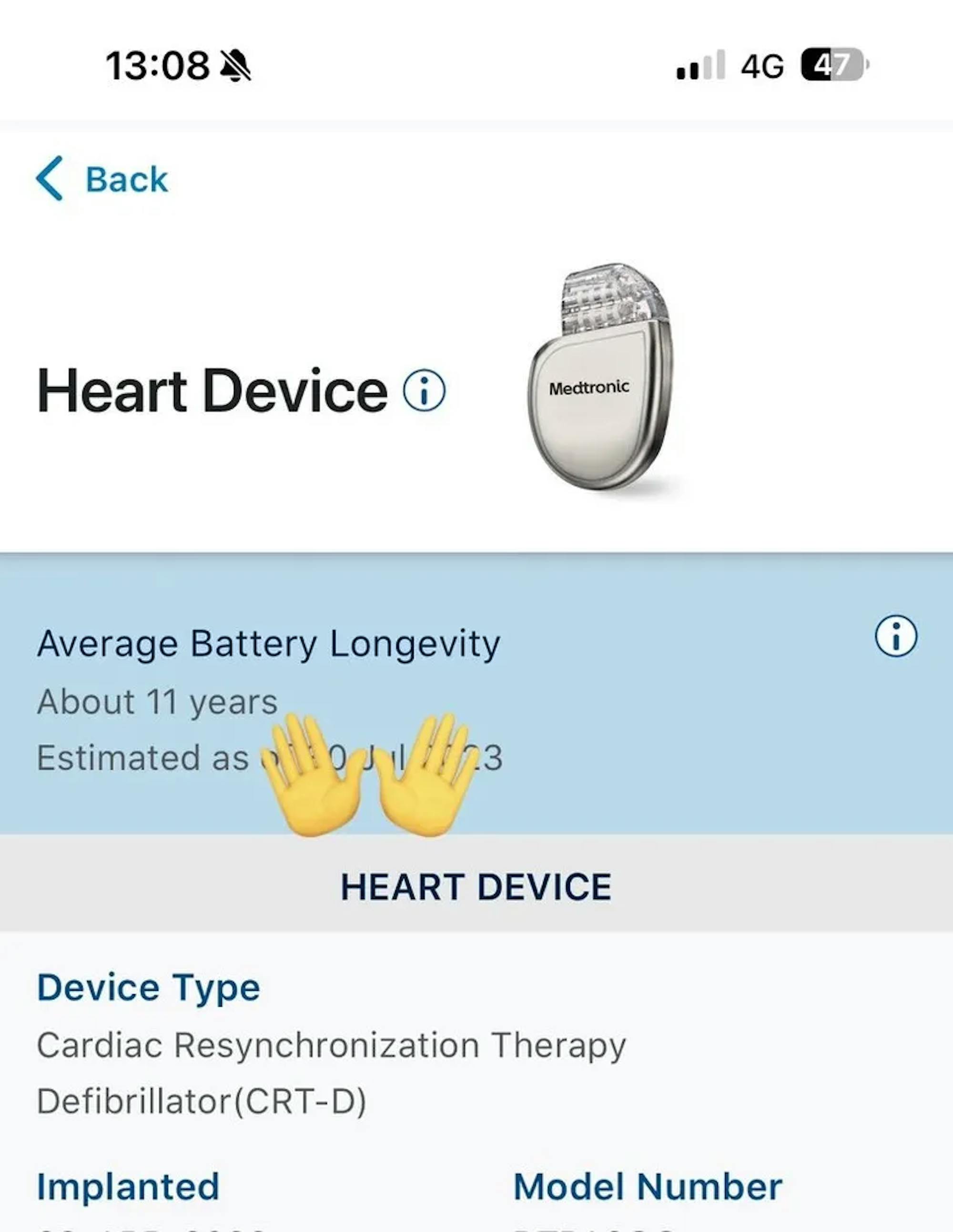
As someone whose iPhone can’t go 24 hours without a charge, the concept of 11 years remains astounding. And it isn’t that it is sitting there dumb, and switched off. It’s Bluetooth enabled, ready to talk to my app 24 hours a day, plus monitoring every heartbeat for arrhythmia, and of course always ready to deliver a restart charge.
I was unaware that a 12 year battery life is even possible for an active device. Just as I was unaware until this week that the new Tesla Cybertruck is pioneering ‘smart’ by using a single Ethernet system, and a 48V capacity, instead of the hundreds of separate wires (and connectors) in a typical car (a number which is increasing massively as cars get ‘smarter’) - such innovation can easily be hidden (especially in a 3 tonne unusually-designed truck). We’re also in an era when a question like ‘are self-driving cars safer than most drivers?’ is endlessly debated…
That kind of disruptive invention is often denied to pharma, versus the medical electronics industry. ‘Smart’ pills, nanoformed compounds that dramatically change absorption, and more are often considered only once the ‘good average’ pill or injection is launched. In the list of biggest-selling drugs, most (non-Covid) drugs are more than a decade old (kudos to Biktarvy for breaking that rule)…
Why does an industry which talks so much of innovation tend to leave it for lifecycle management, especially in an era when only the first few years on market will really count? It’s clear that managing technical risk is a priority, so adding orthogonal risk would have few champions internally. The molecule itself must be all the innovation studied in such an intensely scrutinised period.
Imagining a company that could integrate innovation across more than one dimension is hard. When you know how hard it really is, it seems even harder. I do find this video, of people trying to run even a few metres at marathon world record pace (a pace that those elite runners sustain for 26 miles!) fascinating - even riding a bike at 13mph for 2 hours is hard for most people.
But, imagining is the first step - it is clear that it is possible to conceive of a multidimensional innovation platform. The biggest risk, surely, is that we never try, and hope that we’ll have time later to play with generic molecules…