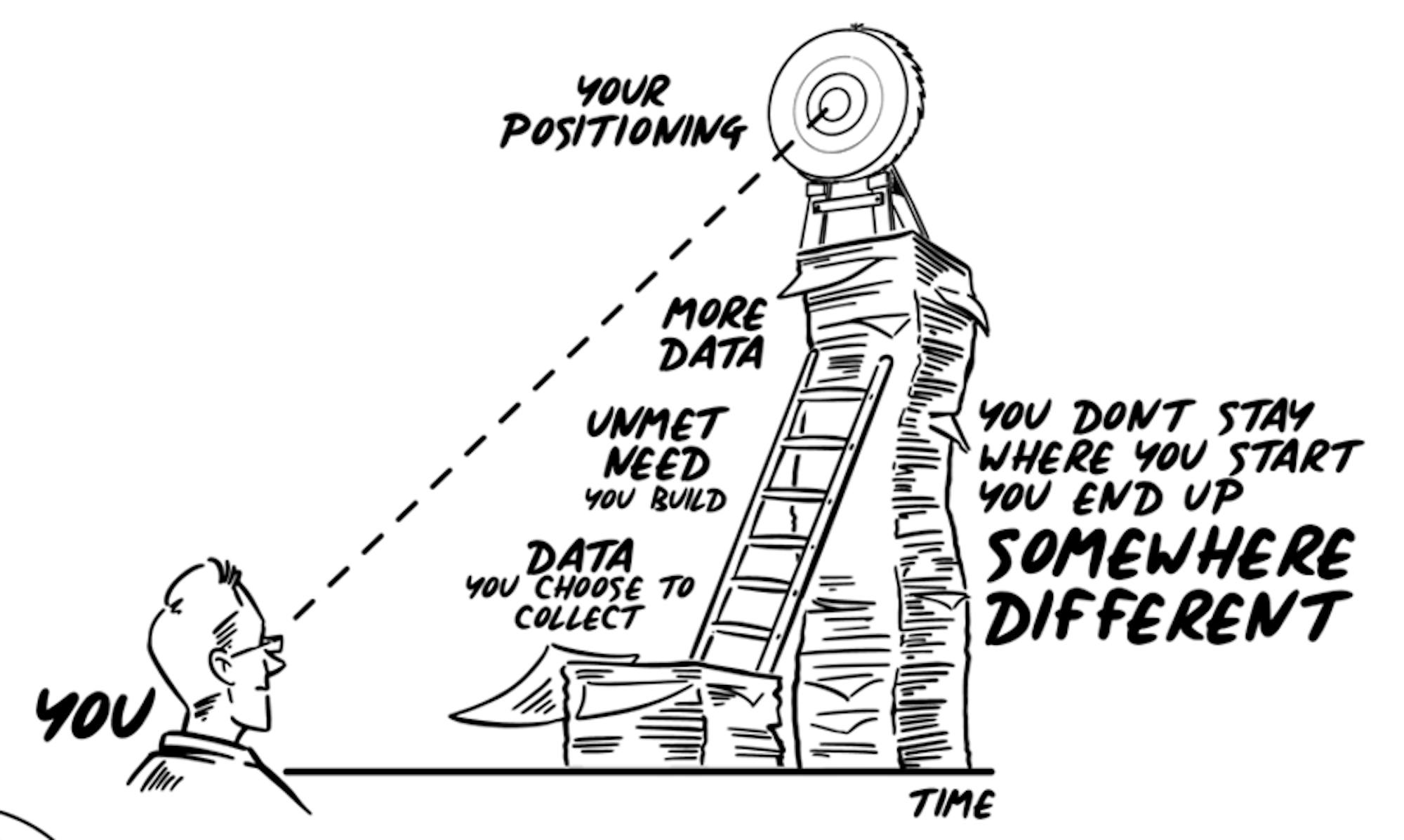
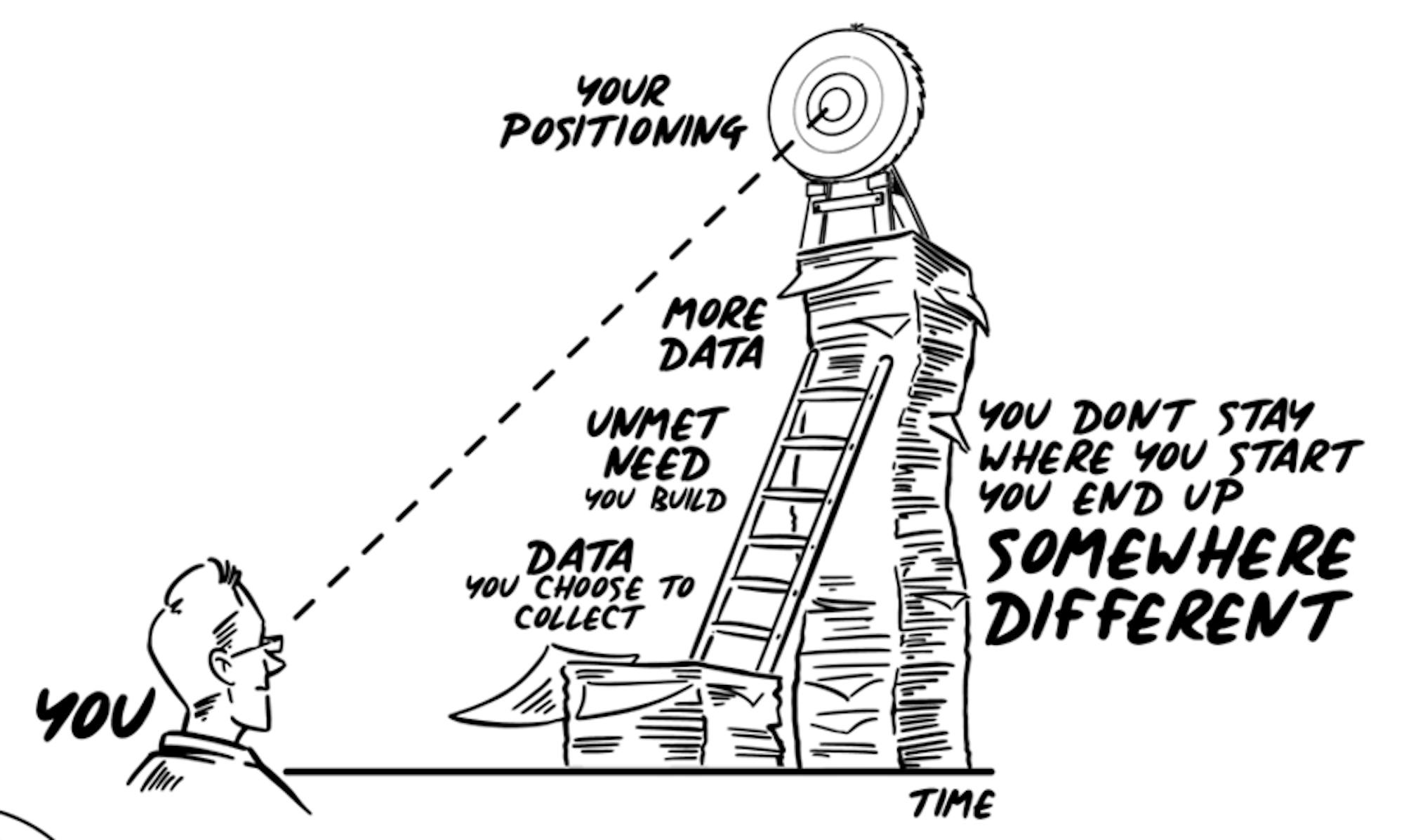
This is the basis for our philosophy on early phase positioning, and it is one that everyone acknowledges – that if you give the same molecule to two different companies when they leave pre-clinical, there is little chance that they’d end up in the same place. (If you were really bold, you’d consider two firewalled teams within your company…) By extension, these choices are ones that the molecule cannot make – you are backcasting from what you think is commercially attractive to you, and what is feasible to develop.
To address the ‘why?’ of positioning, it is critical to establish that the word ‘positioning’ exists as a verb and as a noun. Positioning in phase I is essential, but it is not critical to have a positioning. That is, whoever is making those choices about market position and product in phase I is positioning your drug. Doing what seems obvious at that stage is a decision itself – it will end up passively positioning your drug. To outperform, or to achieve asymmetric performance in development and on the market, decisions in early phase need to be active – the backcasting from market and regulator should bring questions back to the molecule. The molecule itself does not contain all the answers.
This idea, that your speed to better questions for the molecule, is the basis for our discipline of asymmetric learning.
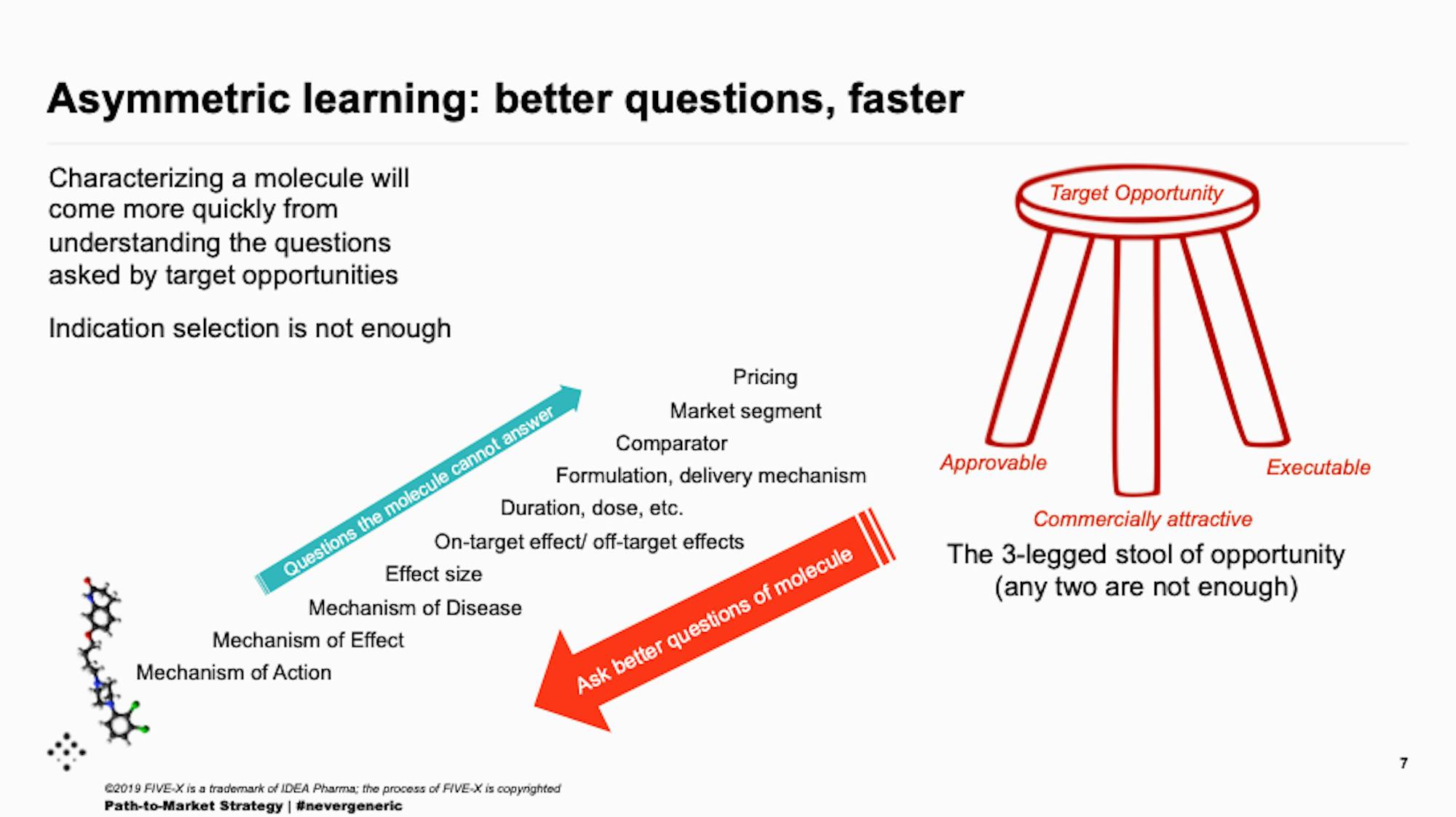
Knowing that you are always positioning your drug is key to our philosophy. Processes that are intended to produce ‘a positioning’ are unfit for purpose in early phase, because the goal of positioning in phase I and II is to provide options, not a single statement. This is liberating, and it does demand that commercial attractiveness is a key consideration in early phase, not something that can wait until later.
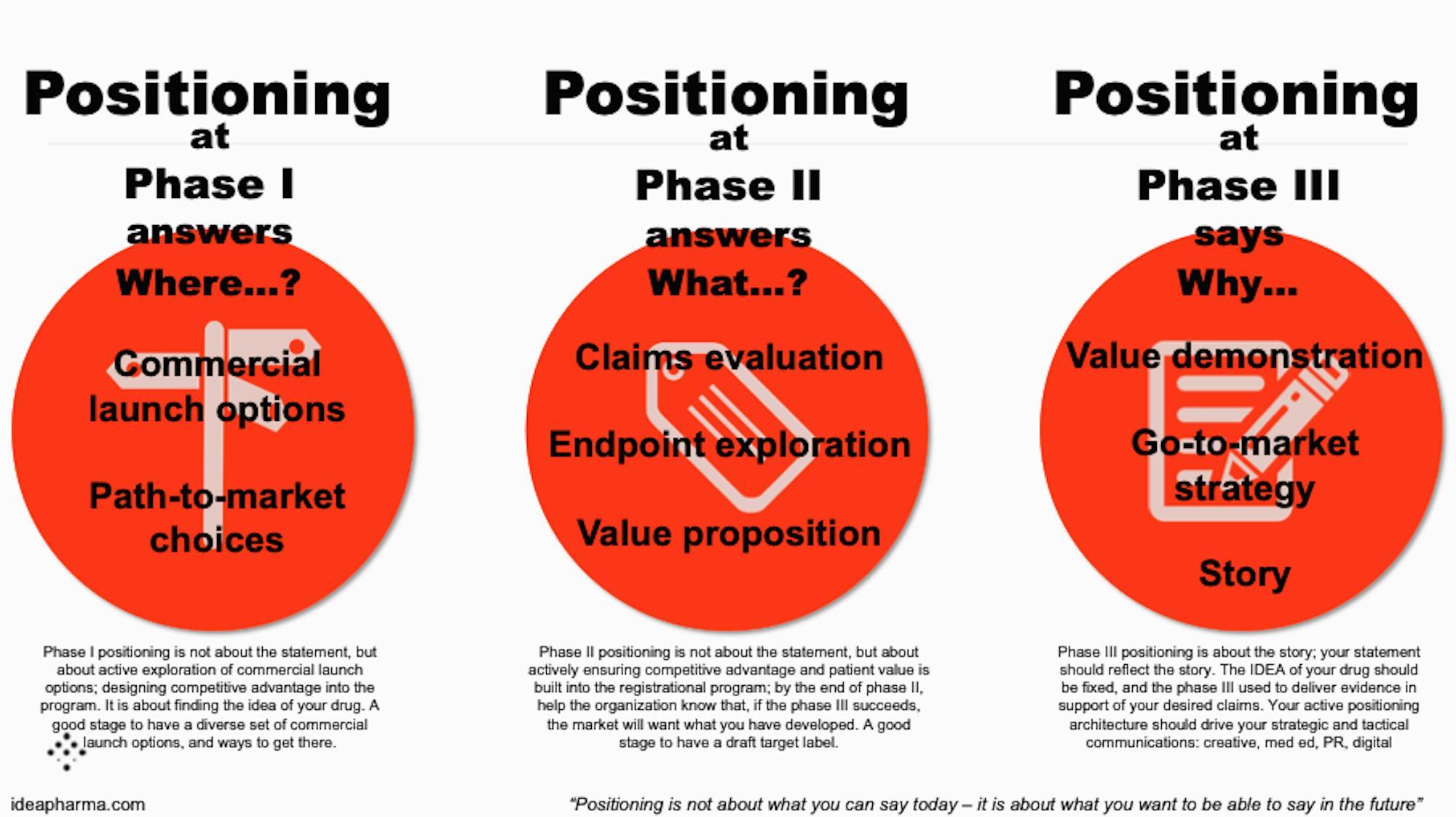
Choosing to end up somewhere different than competition is an option, but one that is lost the longer that ‘the obvious’ is pursued. ‘Follow the science’ is a seductive idea, but science itself is enhanced by better questions.
Subscribe to our newsletter for more insights.
Further reading
-
Announcement
Culture of innovation Part II
At this time of global crisis caused by the Covid19 pandemic, let's look again at what our industry can learn about innovation from previous global crises – such as the first and second World Wars.
-
Announcement
Innovation: Contain, Delay, Research, Mitigate
The UK, rather famously, adopted a four phase approach to the Covid-19 spread.