Insights
Getting sign-off
Written by Mike Rea — 2023-01-31.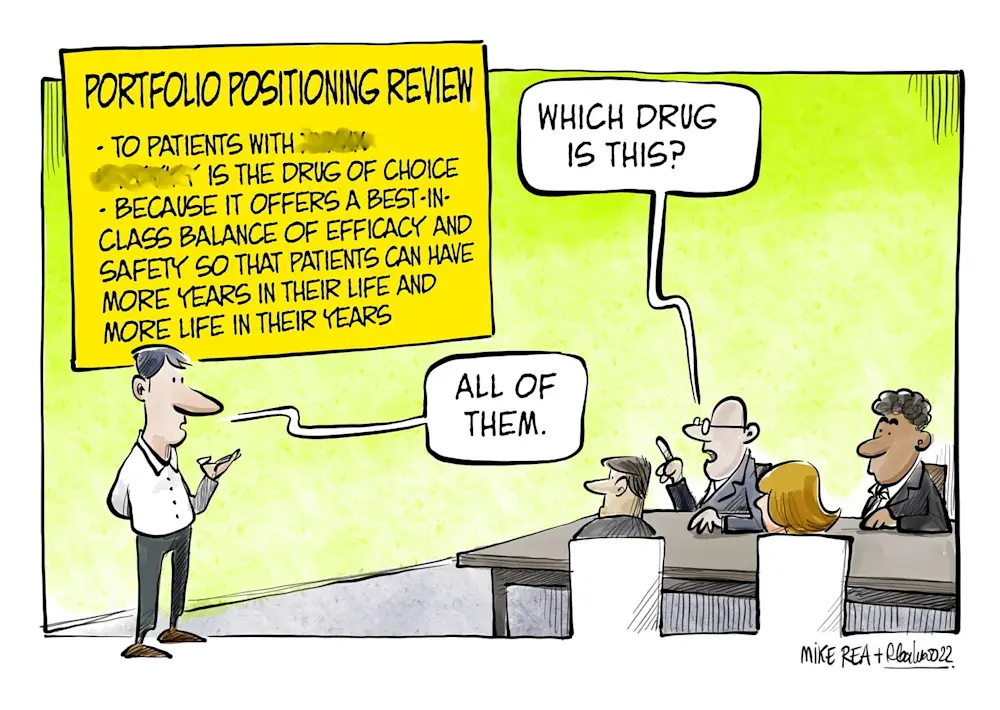
Deep positioning in early phase means generating market position options. There is a rational decision science that will help teams decide between those options. The ‘sign off’ for these options should be a process of deciding how best to study them - the ‘next best experiment’ test.
Positioning in later phase typically means someone senior will want to sign off. Unfortunately, rather than trust the team process, typically this will involve a short review, and a challenge during which all of the myths can be brought out: ‘it needs to be more emotional; has it been tested?; shouldn’t we wait until this campaign runs before changing everything?; we can’t say that…’
If the process to derive the positioning was robust, matrixed and effective, there is no-one on the planet who can propose a better alternative following a short slide review.
It is possible to identify a weak construction, or an absence of logic, or that the statement is a simple string of ‘nice’ sounding phrases, and suspect there must be something better out there, but there is no easy fix at that point. Typically it ends in wordsmithing. If this positioning was the best of a weak bunch of choices, the issue is with the process, not with the choice.
Easy objections, such as ‘it needs to be more emotional’ might sound like the voice of experience, but more often reveal inexperience, or lack of confidence, in positioning. Typically, such companies’ positionings all look the same, changing just the product name. Even more typically, the company will repeat the process regularly, seeking to rectify a failing campaign. A different agency, a different brand lead, and yet the outcome will be the same, limited by the inexperience of the senior leadership.
I have seen hundreds of positioning ‘statements’, and can quickly spot the product of weak process (the same process mistakes are repeated across most), but on the spot, I couldn’t suggest a better one. I don’t know what the team knows. It is easy to resort to wordsmithing - we all become poets and authors and ad executives instantly.
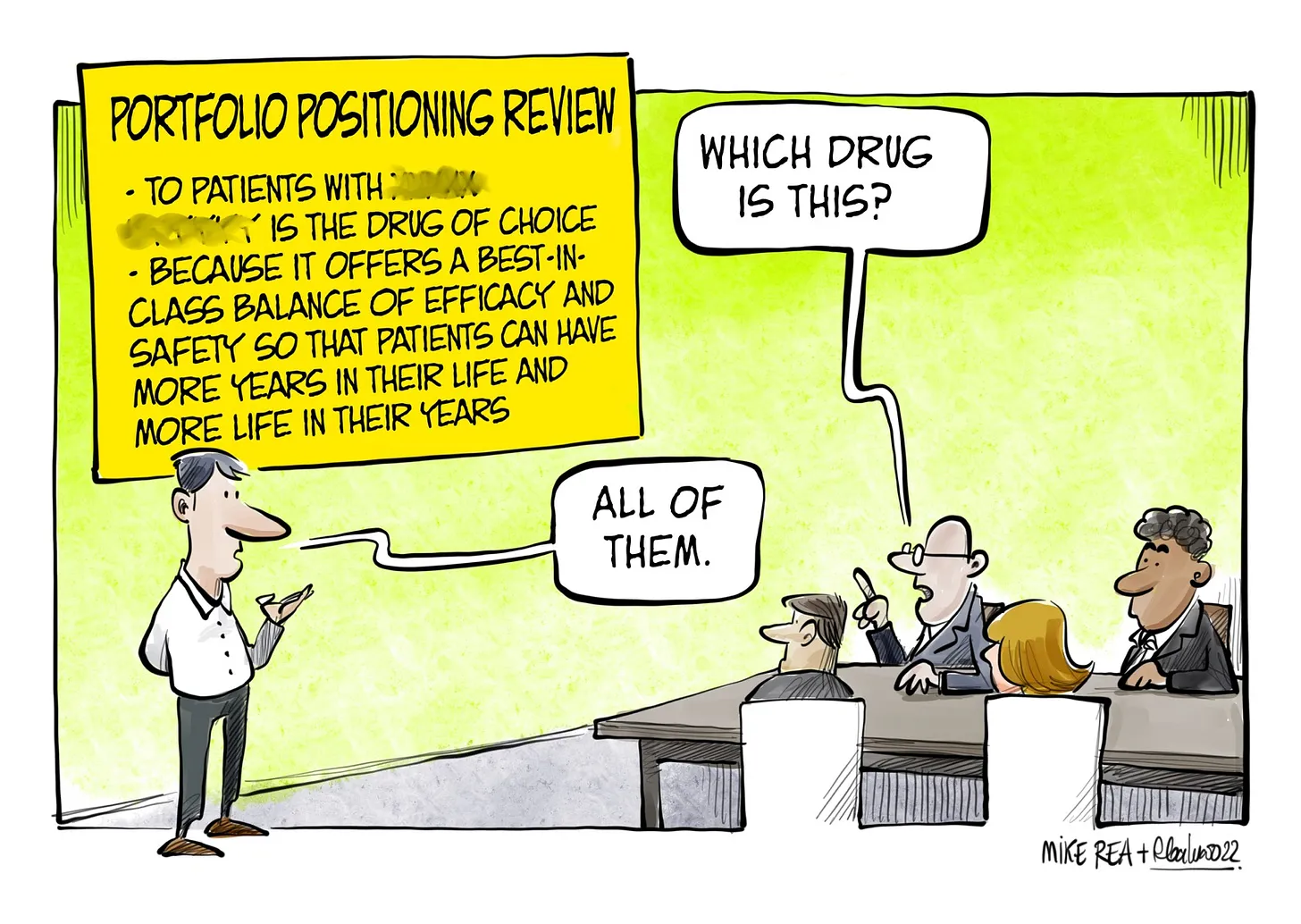
There is only one solution to senior management sign-off for positioning: they must sign off on the process, not the solution. A leadership that has empowered its team should send them off on the journey, and not then try to helicopter into the end stages with personal preferences, ignoring the significant interactions the team will have had on the way. Great process will reveal things about the product that the team didn’t know before, or about the market. Missing those insights means that anyone outside the team is relying either on what they knew before, or hoping it can all be crunched into a few minutes of briefing.
We can admit that there are ways that process can be corrupted: if the decision making within the team is too democratic, or there is too strong a veto from key departments (regulatory, market research, perhaps), the voices of experience in the team can spend their time on team wrangling rather than choosing bolder, better options. There is no surprise that the best positionings I have ever seen, or been involved with, were generated by small teams of experienced executives, empowered by leadership. ‘Buy in’ can be overrated. Teams certainly need to understand the ins and outs of the chosen positioning. They don’t all have to ‘like’ it, but they do have to agree to implement it. A strong positioning architecture is specific and detailed enough to direct activity within guardrails, and so is not amenable to a popularity contest.
There is also the ‘Miss America’ challenge. The "Miss America" decision-making error refers to a phenomenon where people vote for a candidate they think will win, rather than the candidate they personally believe is the best choice. This is also known as the "bandwagon effect" or "herding behaviour." The phenomenon is often observed in situations where people are unsure of their own opinions and look to others to guide their decision-making. In positioning process, this shows up as people choosing what they think is the best ‘positioning’ rather than bringing their perspectives to the strategy. Positioning has to do work, rather than sound ‘nice’, but on first glance, many people want to go to taglines rather than deep positioning.
If, instead, senior management want to be involved, they should either a) be part of the process, or b) let the team make their own choice and support them. If leadership don’t want to be part of the process, they have to choose b). If they don’t, they are effectively saying that they don’t trust the process. If that is the case, it is a waste of time and resource to let the team start the process in the first place.
The best leadership establishes a corporate process that seeks Deep Positioning in early stage, and active positioning in later stages. It then allows the teams to run the process without second guessing and reviewing the outputs. Trusting the team is binary: if they are allowed to run the process, they have to be allowed to own the output. Removing that empowerment means removing the trust.
IDEA Pharma
We work with clients early in lifecycle, crafting a compelling product story and building a best-in-class strategy that helps every molecule reach its potential. It’s what we do best. And there’s nobody that does it quite like us IDEA Pharma
